
My First Perfboard: Learning Circuits, Breadboards, and Microelectronics
For the past few months, I have been learning how to make circuits powered by ESP32 dev boards and the GPIO pins on my Raspberry Pi 5. I find this interesting because I can make IoT (Internet of Things) projects without a full computer. So far, I have been learning by building these circuits on Breadboards.
However, an issue I kept running into was that breadboards are not great when I build something I want to keep assembled and actually use for a long period of time. They are much better for prototyping circuits. This is what led me to decide to learn how to solder. I first made just a few boards to light up a small LED. I was proud that I could make that but I’ll cover my first real project in this article because I think anyone reading would find it more interesting to hear about how I made a small game console instead of lighting up a little LED.
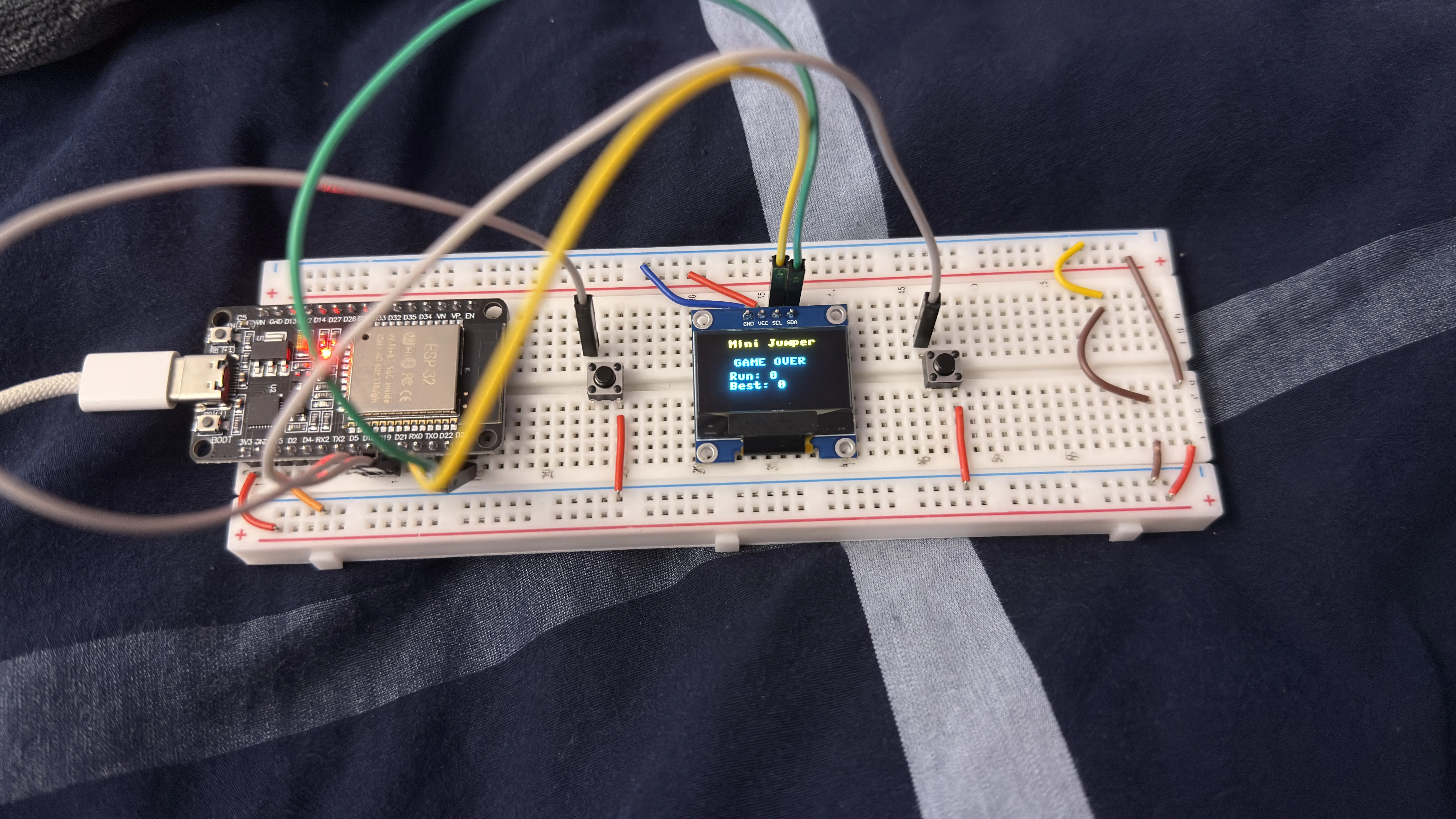
Designing the Jumper Game
The inspiration for my game was the dinosaur game that Chromium-based browsers let you play when you don’t have a Wi‑Fi connection. I already had some buttons from a circuit kit that I had gotten a while ago so I decided to use those for the jump and pause buttons instead of buying new ones. I did buy a few mini OLED displays to use as a screen for the game. I decided to go with ones made by ELEGOO that I got off of Amazon (here), since ELEGOO also makes the ESP32 dev board I like to use (here).
Programming the ESP32 with MicroPython
I chose to code the game using MicroPython since I already know Python pretty well which meant that I could get a finished product done pretty quickly. I think that anyone that is making hobby projects at home should try out using MicroPython. Its syntax is very simple, just like Python. However, it should not be used for a project where startup time is important since it needs to start the interpreter before your code can run.
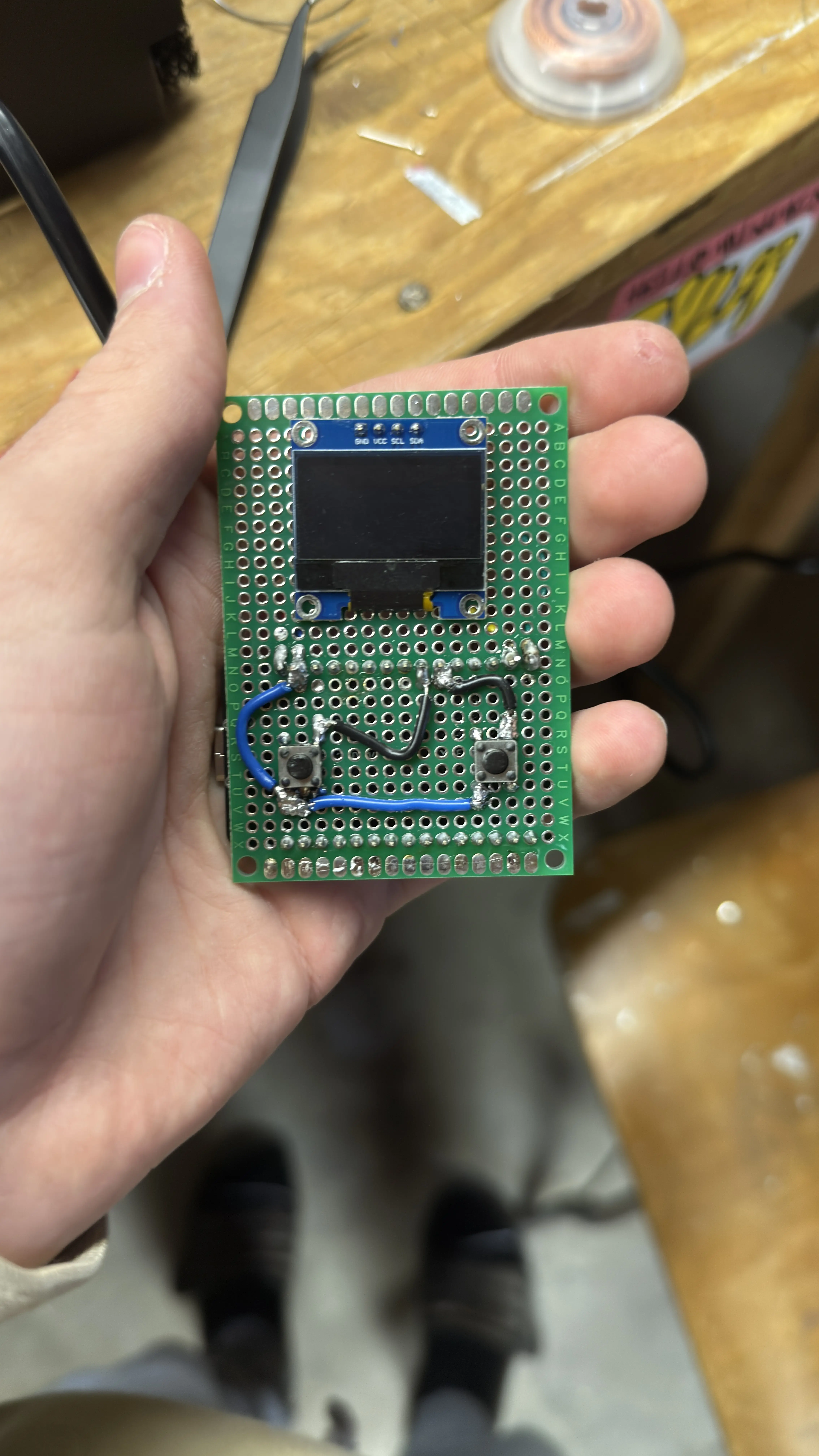
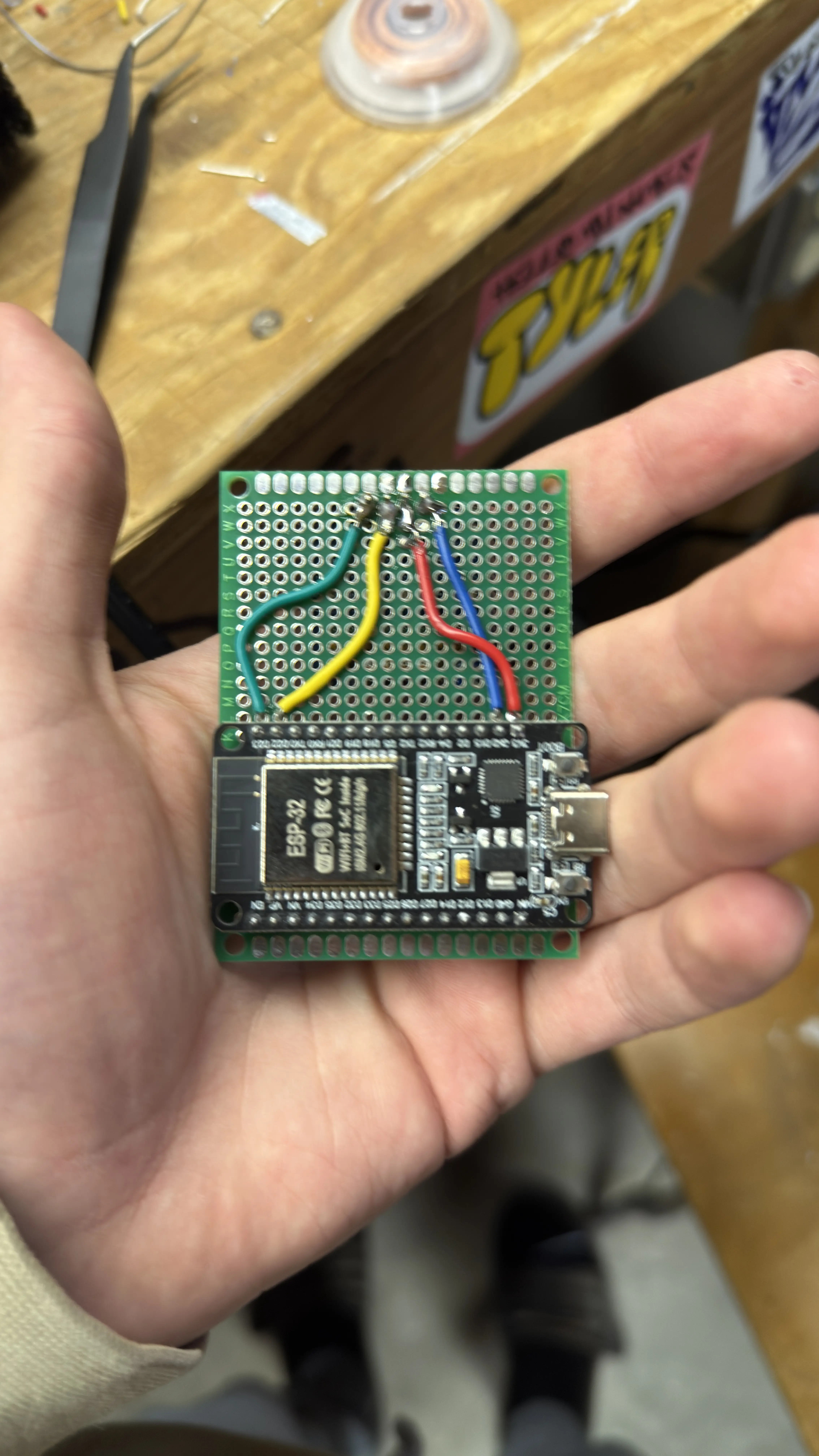
What I Learned About Perfboards and Prototyping
I am very happy with how the finished product came out. That being said, one thing I would do differently or add in the future is to attach a battery to the board so I don't need to plug the ESP32 into my phone or laptop to use as a power source while I play it. I do enjoy playing it and I look forward to doing different projects in the future and learning more about how tech works at a hardware level. This project helped me better understand how perfboards compare to breadboards and why they are better for making things that I want to last.